
Financial advisors
Financial planning helps clients decide where they want to go and how to get there. Account balances show where they are today. What is often harder to see is what happens in between—the continuing flow of income through the household and all the things that income needs to do.
You Need A Cash Plan makes that everyday financial activity visible over time.
A budget can help decide how much to spend or save, but household money also has a time dimension. Income arrives on particular dates. Bills, spending, debt payments, savings, and future expenses occur on their own schedules.
You Need A Cash Plan coordinates when income arrives with how and when the household plans to use it, creating a forward view that a monthly budget does not provide.
Clients see a rolling twelve-month picture of their household cash flow: when income is expected, how they plan to use it, and the resulting net cash flow through time.
Instead of relying on today's account balance to judge what they can afford, they can see the future effects of decisions before making them.
Your recommendations enter the same flow of money as everything else in the client's household. A higher retirement contribution, accelerated debt payment, new insurance premium, or savings goal has to coexist with all the other demands on income.
You Need A Cash Plan lets the client see where your recommendation fits and how it affects the rest of their cash flow—giving you both a clearer basis for the conversation.
It doesn't replace financial planning. It fills the space between the financial plan and the client's everyday financial life.
You continue helping clients establish goals and make financial decisions. You Need A Cash Plan gives clients a way to carry those decisions into the ongoing operation of their household money—and keep them visible between meetings.
Financial advice ultimately has to fit into the everyday flow of household money.

Your clients may understand the financial advice you give them. The challenge comes when they go home and have to fit that advice into everything else their income already needs to do.
Without a clear view of their everyday cash flow, even good financial advice can be difficult to put into practice.

A recommendation to save more, reduce debt, build reserves, or prepare for a major expense ultimately has to become part of the household's everyday use of income.
You Need A Cash Plan gives clients a way to see where that recommendation fits—and what effect it will have on the rest of their financial life.

The work doesn't have to stop when the client leaves your office. You Need A Cash Plan gives clients a continuously maintained view of their cash flow, so they can keep planning, make adjustments as circumstances change, and see the effects of their decisions.
They return to the next meeting able to see how their financial decisions are actually playing out at home.
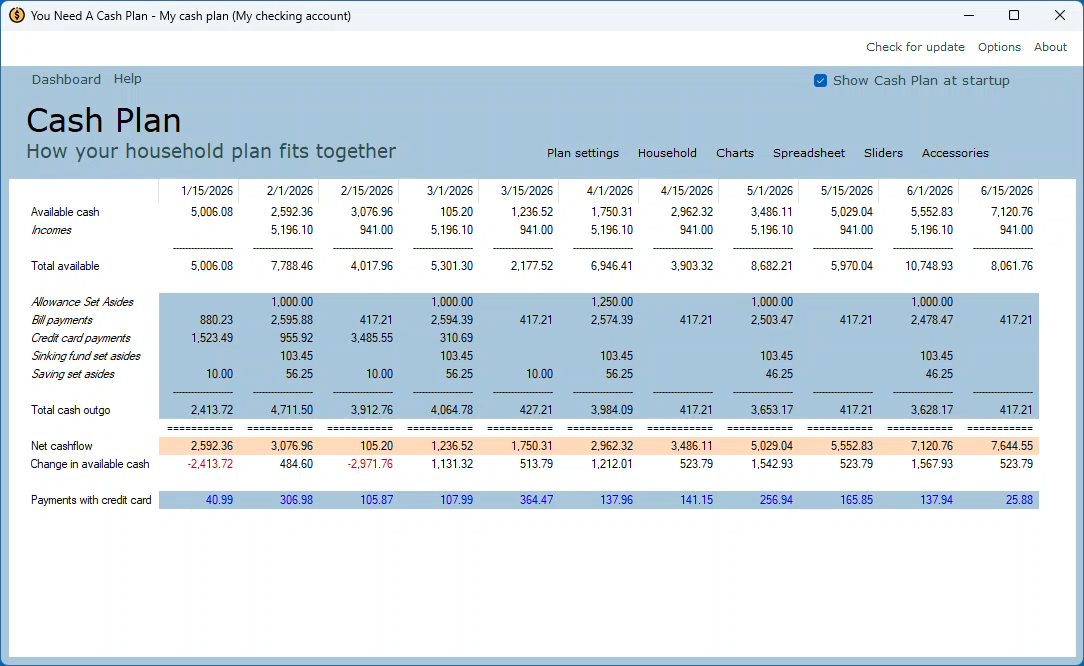
Investment accounts are only part of the picture. The everyday movement of income through the household affects the client's ability to save, reduce debt, prepare for future expenses, and ultimately pursue the goals you're helping them achieve.
You Need A Cash Plan gives you and your client a common view of that part of their financial life.