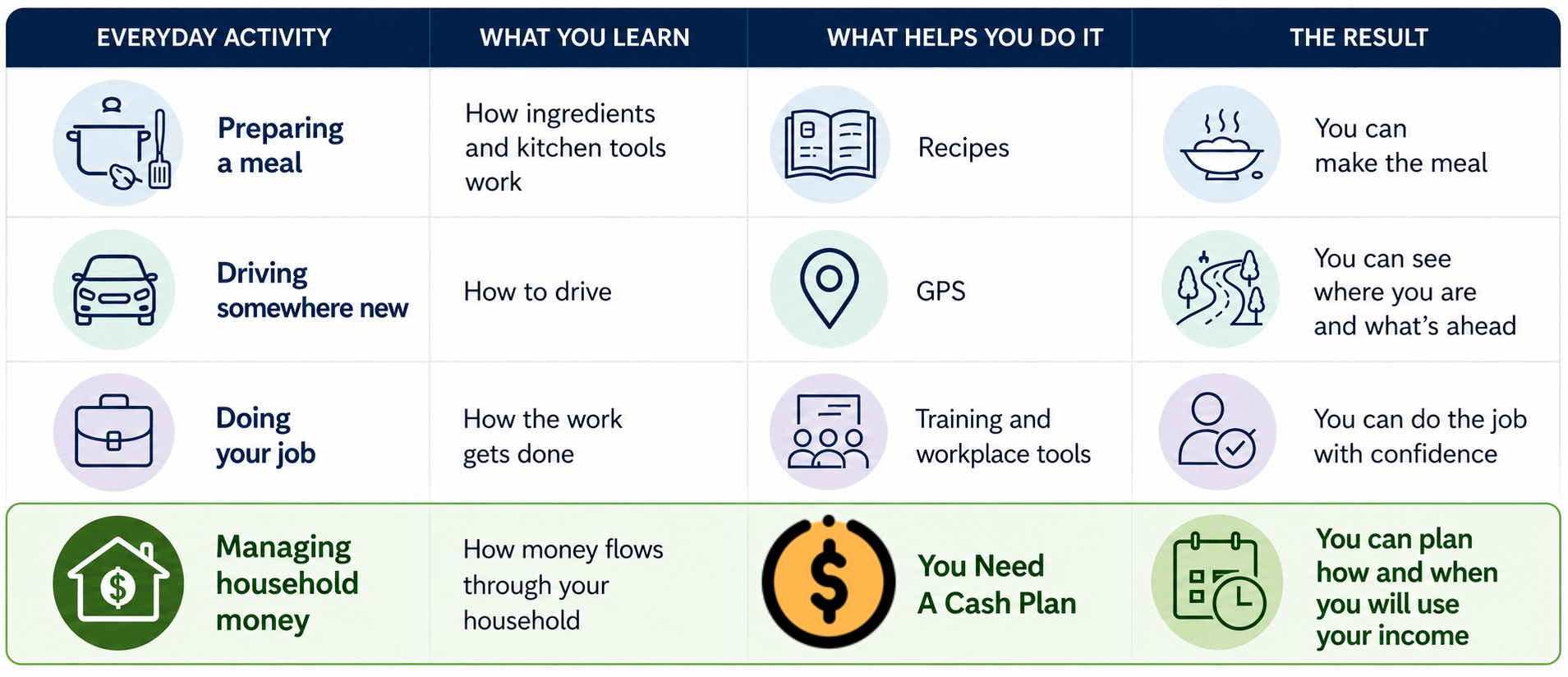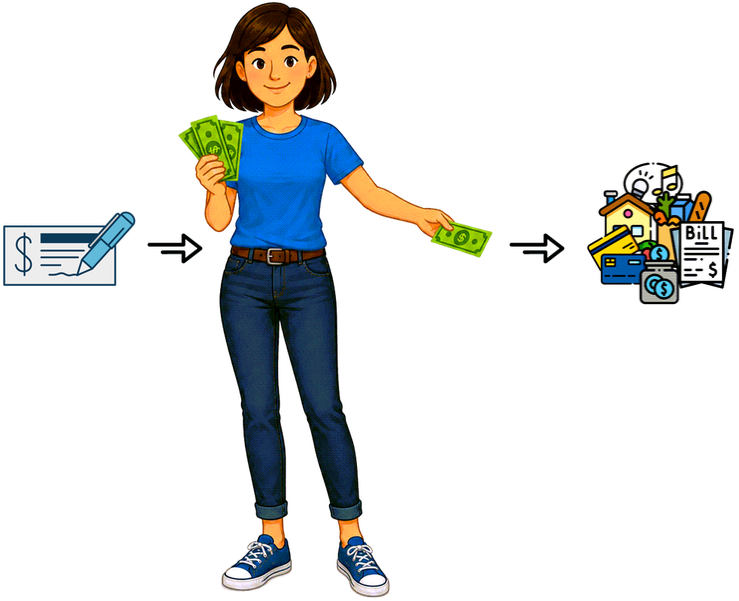
There are two aspects of your money: getting by day-to-day and building wealth. Getting rich is easier when you first achieve stability and clarity with your everyday money.
Life doesn't stand still. You get your first apartment, buy a car, start a family, change jobs, help aging parents, or recover from an unexpected setback. Each of these Money Moments changes the way money flows through your life and raises new questions.
Only a cash plan gives you a safe place to play "What If?" with possible answers before making important decisions.
| Your Money Moment | The Questions It Raises | Play "What If?" with Possible Answers |
|---|---|---|
| Getting Your First Apartment: Can I Make It on My Own? | Can I afford this apartment? What expenses am I forgetting? How much rent is too much? | In your cash plan, try different combinations of rent, utilities, food, transportation, and other expenses until you find an arrangement that works with your income. |
| Getting Your First Paycheck: Where Does My Money Need to Go? | How much should I save? How much can I spend? How do I avoid running short of money? | Experiment with different amounts for spending, saving, and future goals until you find a balance that feels right for you. |
| Buying a Car: How Much Vehicle Fits My Life? | How much car can I afford? What will insurance and fuel cost? Will a payment squeeze everything else? | Try different purchase prices, down payments, loan terms, and transportation costs until you find an option that comfortably fits your income. |
| Preparing for a Baby: How Will We Make Room for a Growing Family? | How much will things cost? What priorities need to change? Can we still save for our goals? | Explore different ways of adjusting spending, saving, and other priorities to make room for your growing family's needs. |
| Changing Jobs: How Does This New Opportunity Change Things? | How will different pay or benefits affect us? What if there are moving costs or a gap in income? | Compare different income and expense scenarios until you understand how the change affects your finances. |
| Facing a Financial Setback: How Do I Regain My Footing? | Which bills come first? How do I make my money last? What can I postpone? | Experiment with different spending priorities and adjustments until you find a path toward stability and recovery. |
| Helping Aging Parents: How Can I Help and Still Protect My Future? | How much support can I provide? What will it mean for my own goals and obligations? | Test different levels of assistance and see how they affect your own finances before making commitments. |
| Transitioning into Retirement: What Will Life Look Like on a Different Income? | Will I have enough? How should my spending change? What if expenses increase? | Explore different spending patterns and income assumptions until you gain confidence about what retirement may look like. |
You Need A Cash Plan helps households by giving them a simple, modern way to see exactly how much money is coming in, going out, and what’s left for the next twelve months. It replaces stress and guesswork with clarity. Families can make decisions with confidence, stay on the same page financially, and finally feel in control of their cash flow without complicated budgeting or spreadsheets.
You Need A Cash Plan helps teach personal finance by giving students a clear, hands-on way to see how cash flow really works. Instead of abstract lessons, learners can practice projecting income, expenses, and what’s left to build real-life money skills that they can use immediately. It makes financial education simple, visual, and practical for any age group.
You Need A Cash Plan helps financial advisors by giving clients a simple, visual way to understand their future net cashflow. Instead of guessing where their money is going, clients come to meetings prepared, aligned, and more confident. Advisors save time, reduce repetitive budgeting conversations, and can focus on higher-value planning because clients finally have a clear, consistent cashflow system they can use at home between sessions.
When planning a path out of debt
You Need A Cash Plan helps you see where your money really goes so you can take control, stop falling behind, and start paying down debt with confidence. You have calculators with which you can create custom payoff plans for one debt, a debt snowball, and amortizing a high balance on a credit card.
You Need A Cash Plan has an Advance Plan feature that helps couples see their full financial picture before they say “I do.” It makes it easy to talk about money, combine plans, and build confidence in how they’ll handle expenses together after the honeymoon.
The HEMS Financial Fitness Mentor program combines mentoring, workshops, and a proven forward-looking cash flow framework to help individuals and families better manage household finances. Built around the book Get Real With Your Money and supported by You Need A Cash Plan, the program gives participants a simple, practical way to understand what their money needs to do next instead of reacting to what already happened. Mentors can focus on guidance and encouragement while participants gain clarity, build confidence, and develop sustainable financial habits through real-life implementation.
You Need A Cash Plan is simple, practical software that automatically organizes your income around real life, not artificial categories or spending rules.
A key aspect of using You Need A Cash Plan is how little of your time is needed. With the program doing the heavy lifting, your involvement in managing your income is greatly reduced compared to maintaining a budget.
Click here for an in-depth comparison of You Need A Cash Plan vs. budgeting.